Showing posts with label mary. Show all posts

Saturday, December 1, 2012

Mothering, Managing, and Mentoring: Waddling to Swaddling to Coddling to Modeling.


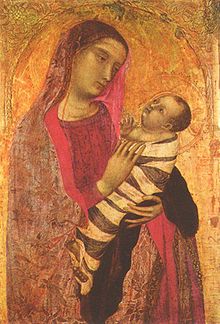
Do you suppose that the Queen of Heaven waddled around in this last month of her pregnancy with Jesus?   

My mother would push up her bottom lip disdainfully and say “Johhhhhhhnnnnnnnn! That’s sacrilegious!”  But Mary was, after all, human and Advent, which I’ll call her waddling period, begins for all of us the human condition of holding in, holding on, and humanizing.

This is not just a mother thing, or even a woman thing.  It’s a human thing.  We all, men and women, are inclined to do it with projects or teams. 

Waddling:  It’s growing large in us – this child or this project or this dream.  It is ours alone, and it is increasing our awareness of our capacity – and we like that.  But as it grows, it begins to weigh us down, inhabit us and inhibit us.  It struggles and moves in us, wanting to emerge and grow beyond our limits and constraints.  It is time for us to release it, and for it to be born.

Swaddling:  Birthing is not a letting go, it is just a letting out, a surrender to the inevitable escape of project or child or team beyond our physical boundaries.  Mothers don’t just drop babies like weeds drop seeds.  Managers don’t just drop ideas through slots in their door so that others can pick them up, interpret, and develop them.  Swaddling is an in-between time when the baby is wrapped tight, its arms and legs held close as they were in utero, so they feel the transition to freedom gradually.  The swaddled child (and swaddled project) is constrained for its own protection.  But it is as dependent as it was within us.  It continues to be an extension of our will.

Coddling:  Soon enough the project or the child or the team begins to exert its own will, to reach to grow beyond us.  Designer or manager or mother, we think (rightly or wrongly) that we are still needed to guide and form and feed and reinforce so that the child or project or design shapes up that we think is best...or is it feel?  This thinking/feeling ambivalence in us is perhaps the staying/leaving ambivalence that the child or team has, but we coddle it – applying sweet rewards to keep it close.

Until now, all of our actions are levels of control.  Perhaps it is we who are called to be born, to be released from the constraints of role as controller.

Modeling:  As the child or project or design begins to “find itself” in this chaos of external influence, we can discover the gift of becoming ourselves, of being present with the child or project or team, of letting it be influenced by us, of finding resonance and rightness within itself in those aspects of us that fit. 

Does this last step sound too confusing or complex?  That’s appropriate.  Once we abandon control and are born into our identity as no longer master but companion, life is no longer dogma, but nuance.  It is no longer math, but music.   “Right” is no longer something we prove, but something we feel.

Years from now, Mary will find her son Jesus in the temple, speaking precociously with the elders.  She thought he was “lost”.  But he was finding himself.  And, we are told, “Mary returned home with Jesus and pondered these things in her heart.”  The boy was out of control.  And, I propose, God looked at it, and said it was good.

Friday, November 30, 2012

Maternity and The Price of Wings


There was a moment when I realized that my mother had let me go.  It came twenty years after I had walked away. 

I remember vividly sitting down in my first desk on my first day in first grade.  I was eager to go, because my brother Danny had, for the past year, left in the morning for school, leaving me to wonder what it was like.  So here it was.  School.  I went to the desk that Sister Dorita, the kind old nun, had pointed me to and sat down, smiling to myself proudly.  

I looked at my mom talking with the sister, and for a long time I’ve known what they were talking about.  The price of wings.

Twenty years or so later, I had swept into my mom and dad’s house with my wife and three kids and all of the stuff that came with us on the road from Detroit, where I’d moved for college, and stayed for life.  While my sisters and my dad settled in the living room with Kathy and the kids, my mom and I sat at the kitchen table with cups of coffee.  I don’t know if she pointed me to sit down there as Sister Dorita had to that first desk, but I’ll never forget the conversation.  It was about wings.

“Johnny, how did you get to be this way,” she asked. 
“What do you mean, mom?”
“You’re so different than you were when you lived at home….” 

I knew she meant that I had become more.  The university had made me bigger than I had been at home with her and my dad.  Kathy had given me not only love and children, but a sense of myself as part McGuyver (who could figure out how to solve problems) and Robert Young, who had played the TV father who “knows best.”  I had grown into someone she could not have imagined.  And I had grown 300 miles away.

In Advent, we wait for Christmas, but it might be worthwhile to consider young Mary large with child.  Perhaps her cousin Elizabeth had been for her the equivalent of my brother Danny, making her as eager for the birth of her first child as I had been for first grade. 

Yesterday I had a conversation with a young mother about wings.  She was feeling the cost of them. 

I’ve reflected, since that conversation, not about Mary large with the child Jesus, but about Naucrete, the mother of Icarus, the boy who flew too close to the sun.  While the father of Icarus who had crafted the wings (Daedalus was a kind of a McGuyver himself) for his son was a member of the Court of King Minos, Icarus’ mother was a slave.  How appropriate.  Aren’t all mothers slaves to the aspirations of their children?  Don’t all mothers slave their lives away to pay the price of a gift they’d rather not buy…wings… for their children?

 As we approach Christmas, all of us born of mothers might consider our own, and the gift they have given us, these wings, to become different than we were when we were living at home, to become bigger, and perhaps to grow farther away, closer to our suns, dreaming not merely of lifting ourselves in the freedom of flight, but lifting the poor into the freedom of dignity and lifting the lost into the belovedness of relationship.